SevenFeeds Explained – we make complicated technology understandable
By Meenakshi – Technology & Startup Writer
Published: September 7, 2026
Updated: September 7, 2026
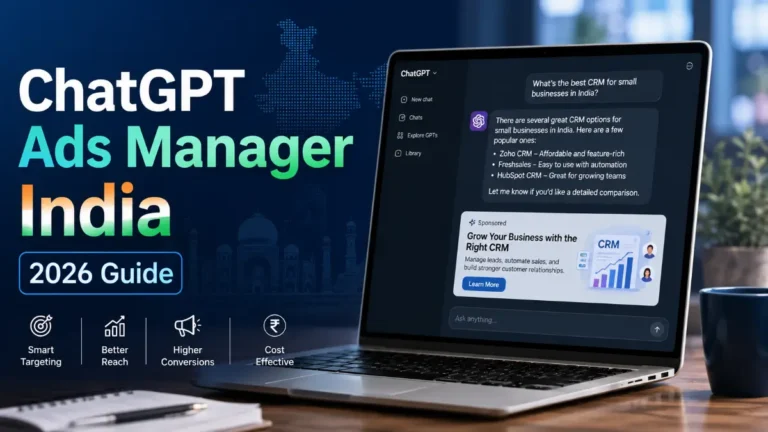
Right now, ChatGPT Ads for businesses in India sits in a strange, useful window: the platform is live, self-serve, and has almost no minimum spend – but most Indian advertisers haven’t started testing it yet. That gap won’t stay open long. Early data already shows LLM-referred traffic converting at roughly 1.5 times the rate of other referral channels, and accounts that build creative and targeting learnings now are expected to have a real auction advantage once competition catches up.
This guide breaks down exactly how ChatGPT Ads works, the real specs and costs involved, and specific strategies depending on whether you’re a startup, a D2C brand, or a local service business.
Why ChatGPT Ads for Businesses Matters Right Now {#why-now}
ChatGPT Ads launched to US Free and Go tier users on February 9, 2026, went fully self-serve by May, and opened to Indian advertisers by end of August. That’s a genuinely new advertising surface—the first one built entirely around conversation context rather than keywords or browsing history.
For businesses, the appeal isn’t just novelty. A 2025 survey found 29% of B2B buyers now use AI tools as their primary product-discovery channel, often skipping search engines entirely. If your customers are already researching decisions inside ChatGPT, being absent from that conversation is a real, measurable gap – not a hypothetical one.
How ChatGPT Ads Actually Works {#how-it-works}
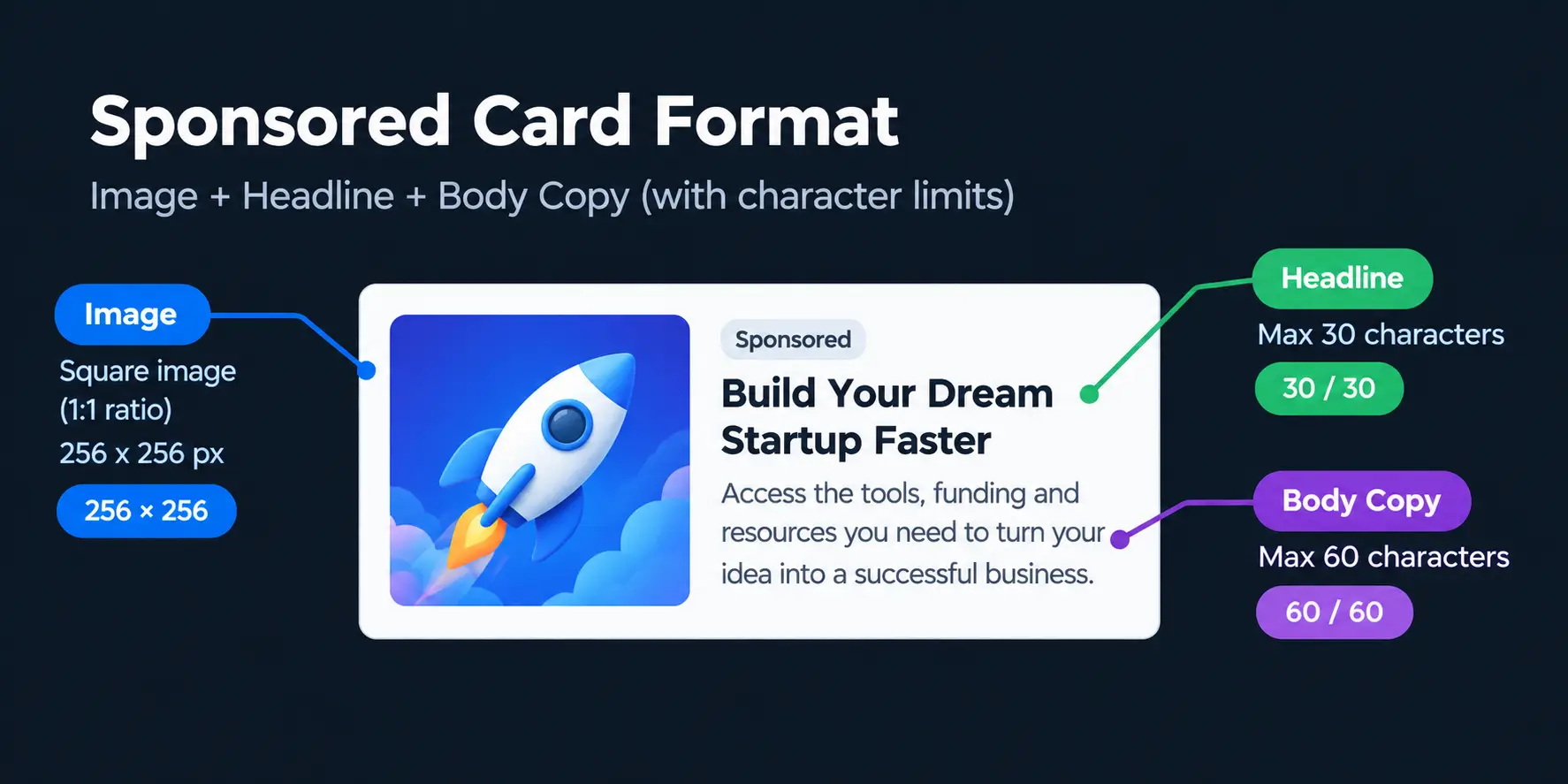
Every ChatGPT Ads campaign follows a three-level structure. The campaign sets your objective, budget, schedule, and target locations. The ad group organises ads around a specific theme or use case, and is where you add “context “hints”—signals that tell OpenAI’s system which conversation topics your ad is relevant to. The ad itself is what the user sees: an advertiser name, a headline, body copy, an image, and a landing page.
The creative specs are tight and specific: a square image at 256×256 pixels, a headline capped at 30 characters, and body copy capped at 60 characters. That’s less room than a Google Search ad headline—every word has to earn its place.
Targeting works differently from anything you’ve likely used before. Rather than matching a keyword or building a behavioral profile from browsing history, ChatGPT Ads reads the context and intent of an entire conversation. The same person could see a completely different ad depending on what they’re actively discussing that session—which means your context hints matter as much as your bid.
On cost: reported CPCs sit between $2 and $8 depending on category, with $3 acting as a hard floor—set a max CPC below that and the platform will tell you your ad may not deliver. That’s meaningfully higher than typical Google Search CPCs of $1-3, but it reflects a smaller, more research-mode audience rather than casual browsers.
Not every category can advertise yet. OpenAI currently restricts adult content, alcohol, tobacco, gambling, and most financial services advertising. If your product touches a regulated space—financial advice, health claims, legal guidance—eligibility often depends on whether your creative and landing page avoid making regulated claims directly, not on the product category alone.
Strategy for Startups: Play the B2B Intent Game {#startups}
Startups, especially B2B SaaS, are currently the best-positioned category on ChatGPT Ads. SaaS and cloud software—CRM, project management, collaboration, analytics, and security—along with professional development and training platforms, have the strongest early eligibility profile of any B2B vertical.
The strategic shift to make traditional B2B advertising starts with audience definition—job title, industry, and seniority. ChatGPT Ads starts a step later, when someone is already actively thinking through a specific problem. That changes what “targeting” even means here—you’re not defining who someone is; you’re defining what conversation topics signal they need what you sell.
Practical startup playbook:
- Build a library of context hints around the specific problems your product solves, not just your product category
- Write benefit-led headlines under 30 characters—think “Cut cloud costs, no migration” rather than your company name
- Expect higher CPCs than Search in the early months, with conversion rates improving as the algorithm learns your account
- Treat the first 60-90 days as a data-building phase, not a performance phase—the compounding advantage goes to whoever starts learning first
Strategy for D2C Brands: Product Spotlight Placements {#d2c}
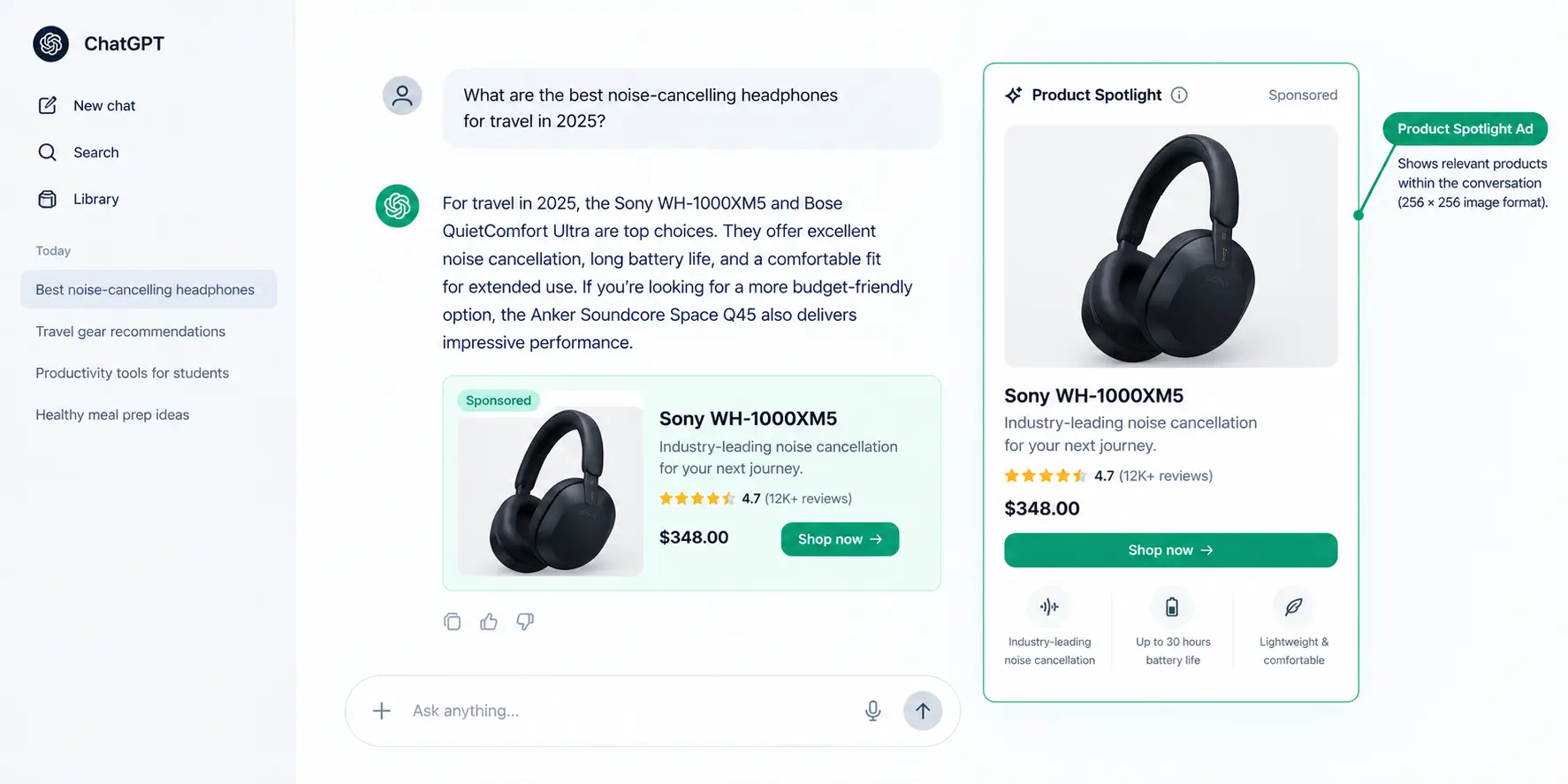
D2C brands have a specific format working in their favor: product spotlight ads, one of three creative formats confirmed live in self-serve as of mid-2026, alongside sponsored answer cards and contextual sidebar placements. Product spotlight ads behave closer to a shoppable display ad, contextually matched to the conversation—a genuinely different surface than a Google Shopping listing or a Meta catalog ad.
Practical D2C playbook:
- Reserve sponsored answer cards for when your product is the direct answer to a user’s question—use product spotlight or sidebar placements for softer, discovery-stage visibility
- Treat the sidebar placement as reinforcement, not a primary conversion driver—it’s built for staying visible across a multi-session research journey, not for one-click sales
- Lean on your product image quality heavily, since the 256×256 square format leaves no room for cluttered creative
- Pair ChatGPT Ads with your existing Meta and Google campaigns rather than replacing either—purchase categories that span multiple research sessions benefit most from being present across all three
Strategy for Local Companies: Set Expectations Correctly {#local}
This is the category where honesty matters most. ChatGPT Ads campaigns do let you set target locations, but the platform was not built for the hyper-local, pincode-level precision that Meta Ads offers a neighbourhood restaurant or salon. If your business depends entirely on foot traffic from a five-kilometer radius, ChatGPT Ads is not yet your primary channel – Meta and Google Local campaigns still do that job better.
Where “local” businesses genuinely do fit: regional service providers whose customers research before ever visiting—coaching businesses, education and test-prep providers, consultants, and professional services operating across a city or state rather than a single storefront. These businesses sell into exactly the kind of extended, conversational research journey ChatGPT Ads was designed around.
Practical local-service playbook:
- Set your campaign’s target locations to the city, state, or region you actually serve, and don’t expect neighbourhood-level precision
- Focus context hints on the problem your service solves, not on “near me” language – that signal doesn’t work the way it does in Google Local Search
- Start with a genuinely small test budget given the $3 CPC floor – this is a channel to watch and learn from, not to bet your primary local marketing budget on yet
Do’s and Don’ts Comparison Table {#dos-donts}
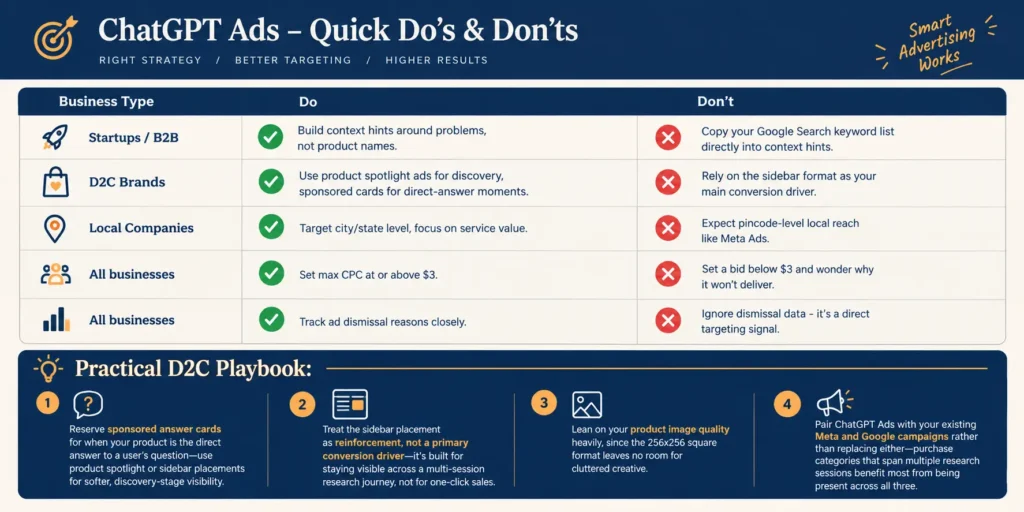
| Business Type | Do | Don’t |
| Startups / B2B | Build context hints around problems, not product names | Copy your Google Search keyword list directly into context hints |
| D2C Brands | Use product spotlight ads for discovery, sponsored cards for direct-answer moments | Rely on the sidebar format as your main conversion driver |
| Local Companies | Target city/state level, focus on service value | Expect pincode-level local reach like Meta Ads |
| All businesses | Set max CPC at or above $3 | Set a bid below $3 and wonder why it won’t deliver |
| All businesses | Track ad dismissal reasons closely | Ignore dismissal data – it’s a direct targeting signal |
What You Can Do Right Now {#action}
- Check your category eligibility today at OpenAI’s ad policy page before building any creative, since restricted categories won’t deliver regardless of budget.
- Draft 3 headline variants under 30 characters built around the specific problem you solve, not your brand name.
- Set your max CPC at $3 or above from day one – a lower bid simply won’t serve, wasting setup time.
- Add UTM parameters to every landing page URL so ChatGPT Ads traffic is visible and comparable inside your existing Google Analytics setup.
- Budget for a 60-90 day learning phase, not immediate ROI – the advantage goes to whoever’s account has the most context-hint data by the time competition increases.
Related on SevenFeeds
- ChatGPT Ads vs Google Ads vs Meta Ads: Which Wins for Indian Businesses in 2026?
- What Is BharatGen? Inside India’s Rs 1,200 Crore AI Bet
- More on AI
- More on Startups
Sources:
- OpenAI Ad Policies – category restrictions and eligibility
- MarTech – 7-step guide to running ads on ChatGPT
- Accuracast – OpenAI ad specs, creative guidelines and FAQs
- Just Global – ChatGPT Ads B2B playbook
People Also Ask FAQs {#faqs}
What are the creative specs for ChatGPT Ads?
A square image at 256×256 pixels, a headline up to 30 characters, and body copy up to 60 characters, with optional UTM parameters on the landing page URL.
How much does it cost to run ChatGPT Ads for a business?
CPCs generally range from $2 to $8 depending on category, with a $3 floor below which ads may not deliver. There’s no minimum spend requirement, so small budgets can test the platform.
Which types of businesses can advertise on ChatGPT?
Most consumer and SaaS categories are eligible now. Restricted categories include adult content, alcohol, tobacco, gambling, and most financial services. Regulated categories may still qualify if creative avoids direct regulated claims.
Can local businesses use ChatGPT Ads effectively?
Campaigns support setting target locations, but the platform isn’t built for hyper-local reach like Meta’s pincode targeting. Regional service businesses fit better than single-location retail or restaurants right now.
How is ChatGPT ads targeting different from Google or Meta?
It matches ads to the context and intent of an entire conversation rather than a keyword or a behavioral profile, so the same user can see different ads depending on what they’re actively discussing.
Should a startup test ChatGPT Ads now or wait?
Testing now has a real advantage – accounts building intent and creative data early are expected to have a meaningful edge once the auction gets more competitive, similar to early Google Ads and Meta Ads advertisers.