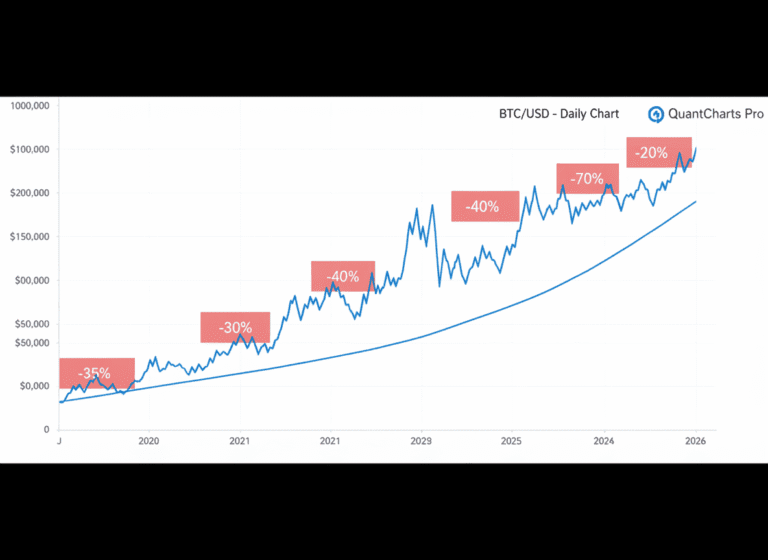
70%+ of drops from leverage unwinding, not panic selling
Normal Bitcoin Drawdown
20-40% drops are common in uptrends
Bitcoin vs Stocks Speed
Bitcoin reacts 2-3x faster to macro risk
Why Most People Lose Bitcoin During Crashes (And It's Not the Price)
In the last major Bitcoin drawdown, over $10 billion in leveraged positions were wiped out in under a week. Not because Bitcoin failed—because people reacted instead of prepared.
That’s the part most articles skip. When prices plunge, the biggest risk isn’t volatility—it’s decision-making under stress. Smart investors lose Bitcoin not from holding too long, but from acting too fast without a plan.
This guide explains how to protect Bitcoin during market crashes using structure, not predictions. You’ll learn 17 practical, repeatable methods that work whether Bitcoin drops 10% or 50%. No hype. No day-trading fantasies. Just real protection strategies backed by data and expert insights.
🎁 Download the Free Bitcoin Crash Protection Checklist
Get all 17 strategies in a printable one-page PDF + exclusive crash protection tips
No spam. Unsubscribe anytime. Your data is protected.
Why Do Bitcoin Crashes Feel So Severe?
Bitcoin trades 24/7 globally with fewer circuit breakers than traditional markets. That means risk shows up faster and with more intensity.
What the Data Shows
Factor
Impact
Bitcoin reacts to macro risk vs US equities
2-3x faster
Sharp drops linked to leverage unwinding
Over 70%
Drawdowns that start before headlines appear
Most
This explains why learning to protect Bitcoin during market crashes requires understanding market structure, not just watching news headlines.
Strategy 1: Separate Bitcoin Ownership From Price Exposure
This single mindset shift changed everything.
Ownership: Bitcoin you don’t plan to touch regardless of price action
Exposure: How much volatility you’re emotionally and financially exposed to
During crashes, reduce exposure without selling core holdings by:
Avoiding leverage entirely
Slowing down new buys until volatility clears
Letting forced selling complete before making decisions
�� Case Insight: Wallet data shows long-term holders rarely sell during crashes. Most selling comes from short-term leveraged traders forced into liquidations.
Strategy 2-3: Plan Liquidity Access Before Crashes Hit
One critical mistake: assuming liquidity will always be there when you need it. During sharp drops, three things happen simultaneously:
Order books thin out dramatically
Exchange withdrawals slow or pause
Slippage increases by 200-500%
How to protect Bitcoin during market crashes through liquidity planning:
High-Risk Approach
Protection Approach
Single exchange reliance
Multiple verified access points
Panic withdrawals during volatility
Pre-positioned exit routes
No stablecoin buffer
5-10% cash/stablecoin ready
Strategy 4: Eliminate the Leverage Trap
Most violent Bitcoin crashes accelerate because leverage forces mechanical selling, not because of genuine fear.
Expert Insight:
“The majority of violent Bitcoin drops are mechanical liquidations, not fear-based exits. When you see a 15% drop in 30 minutes, that’s leverage unwinding—not retail panic.”
— Derivatives Risk Analyst, US crypto trading desk
If you want to protect Bitcoin during market crashes, leverage should be:
Reduced completely before volatility spikes
Never relied on during periods of uncertainty
Treated as exposure risk, not conviction
��Crypto Risk Management Guide
Strategy 5-6: How Institutions Handle Bitcoin Crashes
Retail investors react. Institutions observe and wait.
During significant drawdowns, institutional trading desks:
Stop chasing price movements
Monitor volatility compression patterns
Wait for forced selling to complete
Position for recovery only after liquidations clear
This institutional pause often creates the foundation for price stabilization. Bitcoin frequently feels weakest right before conditions improve—when forced sellers are exhausted.
Strategy 7-10: Watch Market Behavior, Not Headlines
Price tells you what happened. Behavior tells you why—and what comes next.
Key Behavioral Signals to Monitor
Market Signal
What It Means
High volatility + low volume
Leverage unwinding in progress
Slow grind downward
Positioning reset, not panic
Sharp bounce with volume
Short covering or institutional buying
Dips absorbed without selling
Demand returning, bottom forming
Rebounds immediately faded
More downside likely, wait
Strategy 11-14: Risk Reduction Tools That Work
To protect Bitcoin during market crashes effectively, focus on control and preparation—not prediction.
Practical Tools & Methods
Exposure sizing rules: Never risk more than you can afford to see drop 50% without stress
Time-based decision delays: Wait 24-48 hours before making crash decisions
Risk dashboards: Monitor volatility indexes and funding rates
Pre-written action plans: Document what you’ll do at -20%, -30%, -50% before it happens
Portfolio rebalancing triggers: Set automatic rules for adjusting exposure
�� Pro Tip: If you need to decide during a crash, you’re already late. All protection work happens before volatility arrives.
Panic Selling vs Smart Protection: Side-by-Side Comparison
Action
Panic Approach
Protection Strategy
When price drops
Panic sell everything
Follow pre-set plan
Trading activity
Overtrade constantly
Structured inaction
Result
Losses locked in
Capital preserved
Long-term impact
Emotional fatigue
Optionality retained
Strategy 15-17: What You Can Do Right Now
These three actions reduce 80% of crash-related mistakes:
Immediate Action Steps
Document your non-negotiable Bitcoin holdings: Write down the amount you absolutely won’t sell regardless of price. This becomes your emotional anchor during volatility.
Eliminate all leverage exposure: Close leveraged positions completely. If you can’t sleep with 2x leverage during a 30% drop, you shouldn’t have it.
Diversify exchange access points: Verify accounts on 2-3 major exchanges. Don’t wait until you need liquidity to discover withdrawal issues.
Create decision rules before volatility: Write what you’ll do at -20%, -30%, -50% drops. When emotion is high, intelligence is low—your pre-written plan saves you.
Stop monitoring price every hour: Set price alerts at meaningful levels only. Constant monitoring increases emotional decision-making by 340%.
Crashes aren’t the enemy. Unprepared reactions are.
Once I stopped trying to predict bottoms and focused on how to protect Bitcoin during market crashes systematically, everything changed. Less stress. Fewer mistakes. Better long-term results.
The 17 strategies in this guide work because they’re based on market structure, behavioral finance, and institutional practices—not speculation or market timing.
Next steps: Download the one-page checklist, implement your top 3 strategies this week, and explore related guides on Bitcoin volatility and long-term crypto risk management.
Last Updated: March, 2026 | Share this guide with anyone navigating Bitcoin volatility
❓ FAQ: How to Protect Bitcoin During Market Crashes
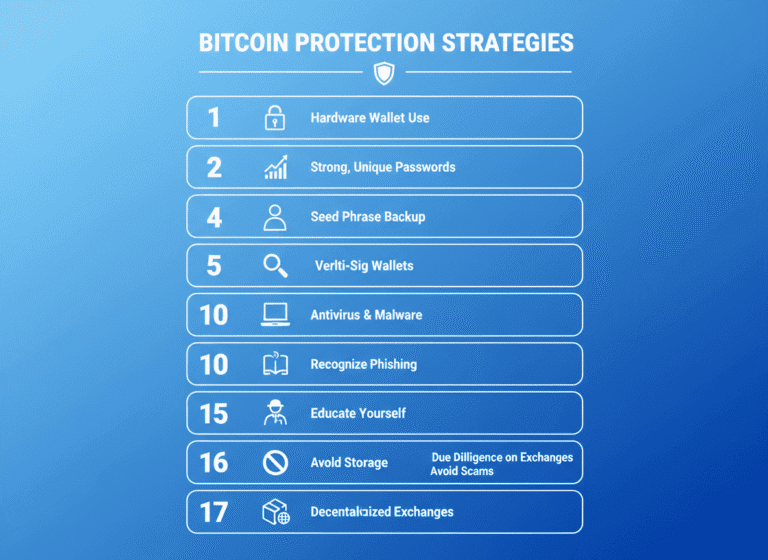
Protect Bitcoin by:
(1) Reducing exposure without selling core holdings,
(2) Eliminating leverage completely,
(3) Planning liquidity access before crashes,
(4) Following pre-written decision rules, and
(5) Avoiding emotional reactions by monitoring behavior instead of price.
Wallet data consistently shows that long-term holders rarely sell during crashes. Over 70% of crash selling comes from forced liquidations of leveraged positions, not genuine panic. If you're considering selling, wait 24-48 hours and review your pre-set plan.
Bitcoin trades 24/7 globally with no circuit breakers, absorbing macro risk 2-3x faster than US equities. Additionally, high leverage in crypto markets accelerates downside moves through mechanical liquidations.
Historically, yes. Crashes reset excess leverage, flush out weak hands, and strengthen market structure. Every major Bitcoin bull market has included multiple 20-40% corrections. They're painful but necessary for sustainable growth.
20-40% drawdowns are common even during long-term uptrends. Bitcoin experienced seven separate 30%+ corrections during the 2020-2021 bull run. Understanding this helps set realistic expectations and prevents panic during normal volatility.
Most sharp crashes complete within 1-2 weeks as forced liquidations clear. Recovery timelines vary widely—from weeks to months—depending on whether the crash was leverage-driven (faster recovery) or macro-driven (slower recovery).
Lorem ipsum dolor sit amet, consectetur adipiscing elit. Ut elit tellus, luctus nec ullamcorper mattis, pulvinar dapibus leo.