Crypto Wallet Security in 2025 Isn’t Optional — It’s Survival
Ever lost sleep worrying about your crypto disappearing overnight? You’re not alone. In 2024, hackers stole over $1 billion worth of cryptocurrency, and 2025 has only raised the stakes. As blockchain adoption accelerates and cybercriminals grow bolder, crypto wallet security in 2025 has shifted from “good to have” to absolutely non-negotiable — whether you’re a first-time investor or a seasoned whale.
If you’ve ever wondered, “How do I actually protect my wallet from hacks?” — this guide is for you. Here are 7 powerful, practical, and beginner-friendly strategies to keep your crypto safe in 2025.
🔐 1. Use Hardware Wallets — Cold Storage Is Still King
Offline storage remains your strongest defense against hackers.
Why cold wallets still lead the way in 2025:
Ideal for long-term holders.
Immune to most online phishing or malware.
Perfect for protecting Ethereum, Bitcoin, and stablecoins.
“If your keys are offline, they’re out of reach for hackers.”
🛠️ Pro Tip: When buying a hardware wallet, stick to the brand’s official store or verified partners. Skip resellers or second-hand units — you never know if the device has been altered before it reaches you.
Still using just a password? That’s crypto suicide in 2025.
Multi-Factor Authentication (MFA) is the minimum standard for securing your crypto wallet. Pair your password with an authentication app like Authy or Google Authenticator.
Benefits of MFA in crypto security:
Protects exchange accounts.
Shields access to hot wallets.
Crucial for preventing SIM-swap attacks.
🔐 Even if someone knows your password, MFA can stop them cold.
🔒 3. Encrypt Your Wallet & Store Offline Backups
Encryption transforms your wallet file into unreadable code unless you have the password — but don’t stop there. Back it up. Securely. Offline.
Smart backup habits for 2025:
Use encrypted USB drives.
Keep backups in fireproof safes.
Avoid Google Drive or other cloud storage.
💾Even if your device gets lost or stolen, having your wallet backup securely encrypted ensures your crypto stays protected.
⚠️ 4. Stay Ahead of Scams and Phishing Attacks
Phishing scams in 2025 are more convincing than ever — AI-generated fake support agents, cloned MetaMask extensions, and realistic wallet pop-ups are now common.
How to avoid crypto hacks in 2025:
Bookmark official wallet URLs.
Avoid clicking on links shared through Telegram, Discord, or any email that seems suspicious.
Verify app publishers before installing wallet software.
🧠 If it feels off, it probably is. Trust your gut — and verify everything.
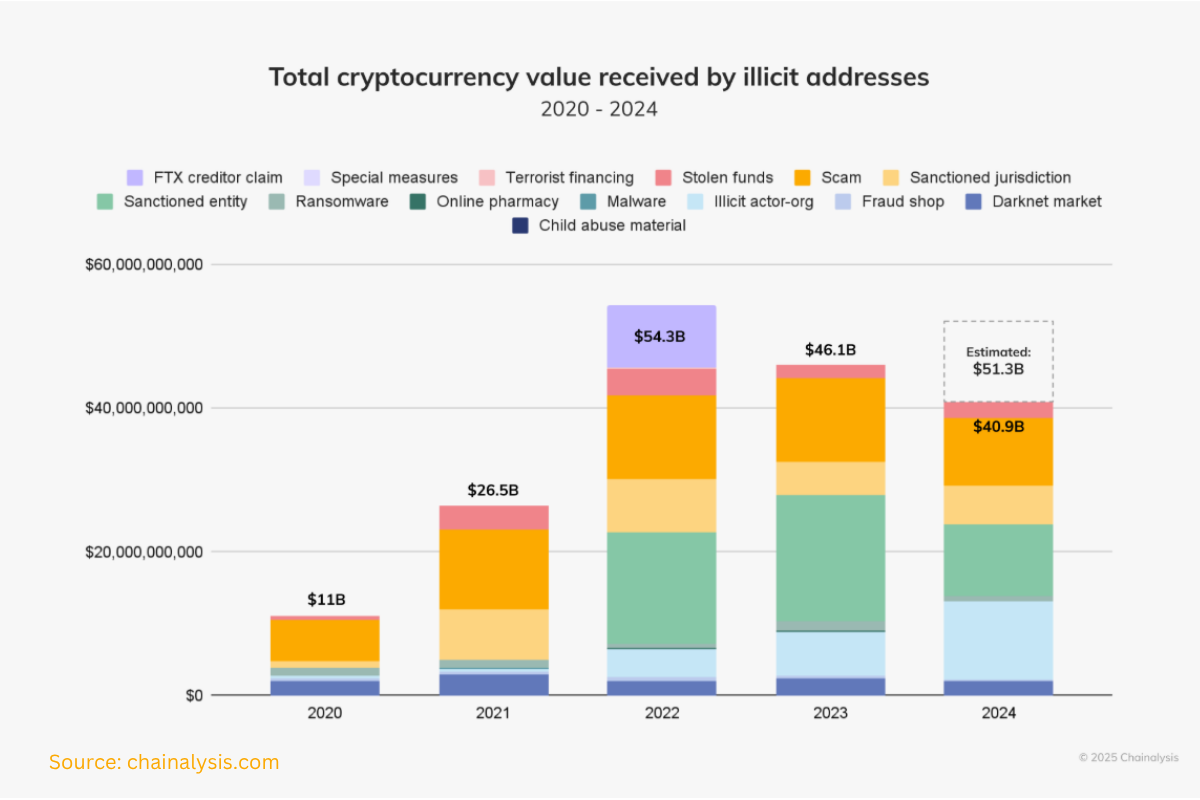
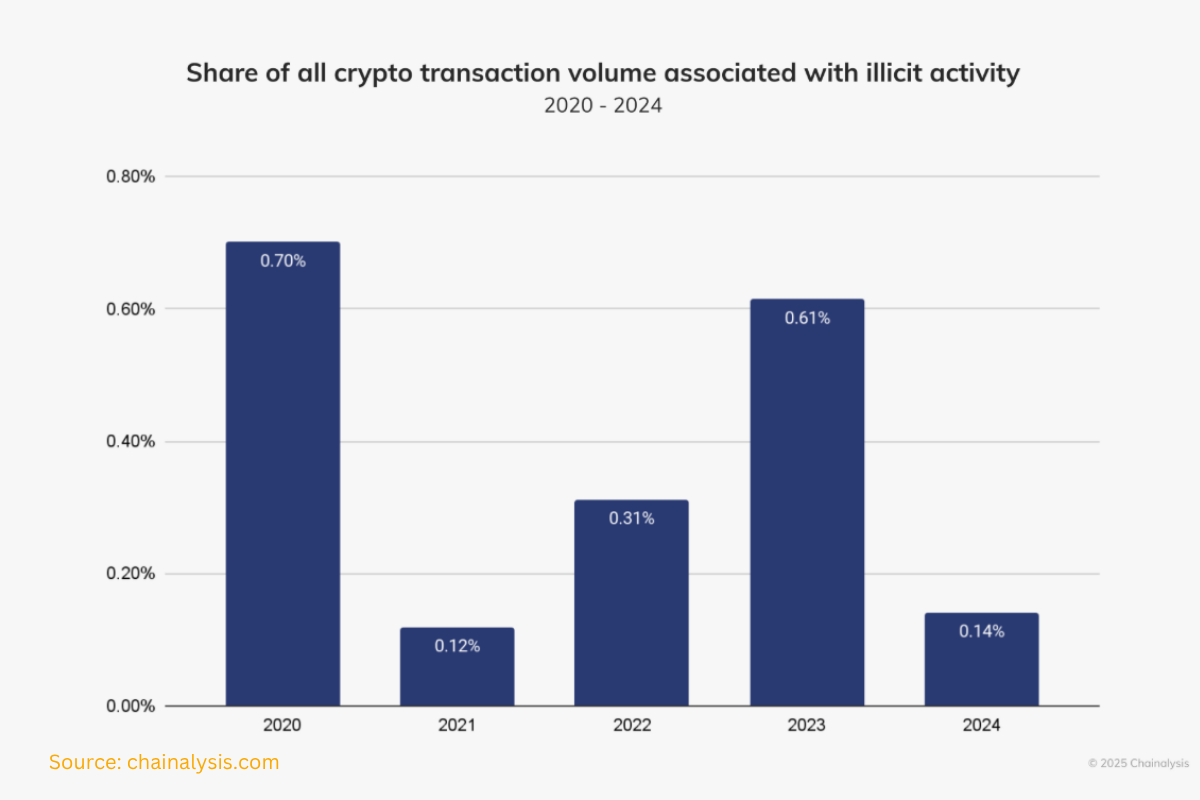
Illicit Crypto Activity by Year (2020–2024):
Even with tighter regulations, illicit crypto activity hasn’t disappeared—in some years, it’s even risen. Massive amounts of stolen cryptocurrency are still moving through hidden, underground markets. (Source: Chainalysis)
📋 5. Customize a Crypto Security Checklist
No two investors are the same—your wallet security plan should match your personal habits.
Illicit Crypto Activity by Year (2020–2024):
Wallet types (cold/hot) you use.
MFA setup status.
Backup schedule.
Software update logs.
Device/browser hygiene.
✅ Print it, keep it visible, and review it monthly. Consistency is your best defense.
🔥 6. Limit Exposure in Hot Wallets
Hot wallets like MetaMask, Phantom, or Trust Wallet are convenient for daily trades but risky for large, long-term holdings.
To protect your crypto wallet in 2025:
Keep only small amounts in hot wallets.
Transfer bulk holdings to hardware wallets.
Disconnect hot wallets when not in use.
🚫 Think of hot wallets like cash in your pocket — never as your savings account.






Thanks for sharing. I read many of your blog posts, cool, your blog is very good.
Thanks for sharing. I read many of your blog posts, cool, your blog is very good.
Your point of view caught my eye and was very interesting. Thanks. I have a question for you. https://accounts.binance.com/vi/register-person?ref=MFN0EVO1
Your article helped me a lot, is there any more related content? Thanks!
Can you be more specific about the content of your article? After reading it, I still have some doubts. Hope you can help me.
Can you be more specific about the content of your article? After reading it, I still have some doubts. Hope you can help me.
Your point of view caught my eye and was very interesting. Thanks. I have a question for you. https://www.binance.info/register?ref=JW3W4Y3A
Your article helped me a lot, is there any more related content? Thanks!
Can you be more specific about the content of your article? After reading it, I still have some doubts. Hope you can help me.