Google AI Made a Simple Mistake. The Real Story Is What It Reveals

google ai error in search overview

Publish Date: January 7, 2026
Author: Seven Feeds Team

  • Google AI gave a wrong year in an AI Overview
  • The issue wasn’t the date, but the confidence
  • AI summaries now shape user belief instantly
  • Successful AI products keep humans in the loop
  • Trust, not speed, will define AI’s future

A Small Google AI Error That Felt Bigger Than It Was

In 2025, IDC reported that over 60% of internet users now rely on AI-generated answers instead of clicking links. That single data point explains why a recent Google AI error struck a nerve.

When users asked whether 2027 was next year, Google AI Overview answered that 2026 was next year.

The mistake was simple. The reaction was not.

Within hours, screenshots spread across social platforms. Elon Musk weighed in with a short response: “Room for improvement.” That was enough to turn a minor slip into a wider debate about trust, accuracy, and how much authority Google AI should have.

This was never about the year.
It was about confidence.

What Actually Happened With Google AI

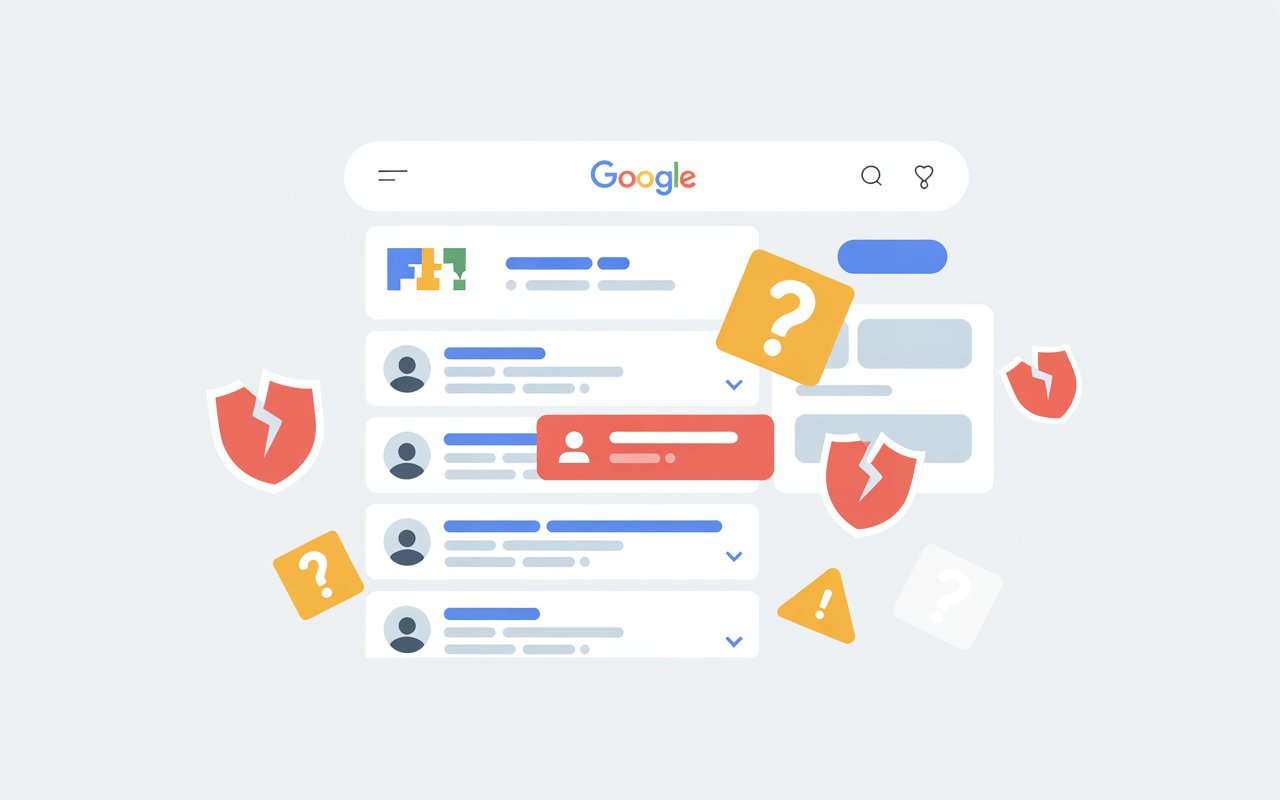
The issue appeared in Google AI Overviews, the AI summaries now shown above traditional search results.

Here’s the key detail many missed.

The sources below the AI box were correct. Trusted publishers and reference sites had the right answer. But the AI summary sat on top, and most users never scrolled.

That is the shift.
Google AI doesn’t feel like a suggestion anymore.
It feels final.

Why This Google AI Moment Matters More Than It Looks

Let’s be honest. No one is planning their life around whether 2026 or 2027 is next year.

But Google AI isn’t answering trivia anymore. It’s shaping how people understand health, money, law, and public policy.

Google processes 8.5 billion searches a day. Even a tiny error rate becomes massive at that scale.

The real risk isn’t misinformation.
It’s unquestioned information.

Real Case Studies: Where AI Is Getting It Right

This isn’t an anti-AI story. It’s a reality check.

Some companies are proving that AI works best when accuracy matters more than speed.

AI Done Right: Real-World Examples

Brand / Product What They Achieved Why It Works
Google DeepMind (AlphaFold) Predicted 200M+ protein structures Peer-reviewed, science-first AI
Microsoft Copilot Adopted by 60% of Fortune 500 Human-in-the-loop design
OpenAI (ChatGPT) Mass adoption with rapid updates Feedback-driven iteration

The common thread?
AI that knows when not to pretend it’s certain.

Where Google AI Has an Advantage and a Problem

What Google AI Does Well

  • Unmatched search data
  • Strong research foundations
  • Deep product integration

Where Google AI Struggles

  • Overconfident summaries
  • Weak temporal reasoning
  • Limited uncertainty signals
  • Rising regulatory pressure

A Human Perspective After Two Decades in Tech

Here’s my take.

Google AI doesn’t need to sound smarter.
It needs to sound more honest.

A visible note like “This answer may be incorrect” would improve trust more than another model upgrade.

People forgive uncertainty.
They don’t forgive misplaced confidence.

What’s Coming Next for Google AI

The next evolution of Google AI won’t be louder or faster.

It will be quieter. More cautious. More transparent.

AI that knows when to slow down will win long-term trust.

Google AI is powerful. But power without trust doesn’t scale.

If this article made you think twice about AI answers, share it, bookmark it, and question confidently.

Also Read:

References

Who We Are

Sevenfeeds is a tech and culture publication exploring how innovation transforms everyday life. We share practical insights, stories, and real experiments with emerging technology — written for curious readers, not algorithms.

FAQs About Google AI

Google AI Overview is an AI-generated summary shown at the top of search results to answer queries quickly.

The model likely failed at temporal reasoning, a known limitation in generative AI systems.

Google AI is helpful, but users should verify important or time-sensitive information.

No. Traditional links remain available and often more reliable.

What happens next after 2025?

Yes, but accuracy will depend on transparency, not just better models.

Leave a Reply

Your email address will not be published. Required fields are marked *

Copyright © 2025 Sevenfeeds. All Right Reserved.